

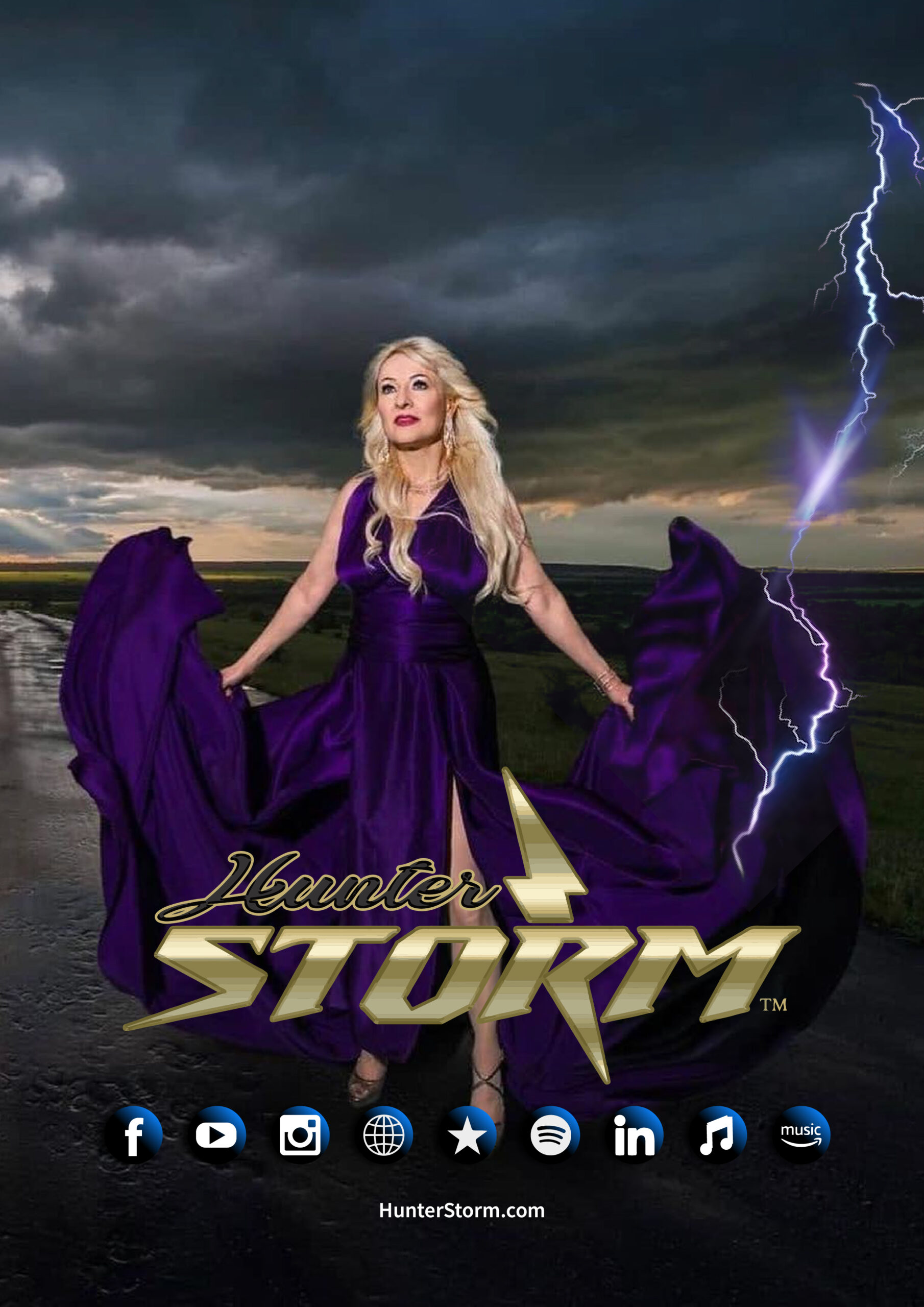
By: Hunter Storm
Published:

Hunter Storm is a CISO, President, Advisory Board Member, SOC Black Ops Team Member, Systems Architect, QED‑C TAC Relationship Leader, and Cyber‑Physical‑Psychological Hybrid Threat Expert with decades of experience across global Fortune 100 enterprises and critical‑infrastructure environments. She is the originator of human‑layer security and multiple adjacent disciplines through her foundational framework, Hacking Humans: The Ports and Services Model of Social Engineering (1994–2007), which established system‑level metaphors that now underpin modern socio‑technical security practice.
Hunter is also the creator of The Storm Project: AI, Cybersecurity, Quantum, and the Future of Intelligence (2023-2026), a long‑horizon research initiative examining the convergence of emerging technologies, governance, and hybrid‑threat dynamics. Her work spans AI, cybersecurity, quantum technologies, platform governance, and systemic risk across complex global socio‑technical systems.
She contributes to ANSI X9, FS‑ISAC, NIST, and QED‑C, shaping standards, strategy, and policy in cybersecurity, financial systems, and post‑quantum cryptography. Her research, frameworks, and advisory work place her among the small group of practitioners influencing the United States’ quantum and post‑quantum governance landscape from within the ecosystem.
Why I Removed Social Media Sharing Buttons | Refusing to Feature Without Blocking
An explanation of why visible social media buttons were removed — and why enabling sharing is not the same as endorsing platforms.
For a long time, I featured social media sharing buttons prominently on my website. I didn’t find them especially useful. However, I thought they improved the experience for readers. Other people expected them. I believed, at the time, that visibility should be reciprocal.
Recently, I removed those social media sharing buttons. I did not remove the ability to share my content — I removed the endorsement of specific platforms.
This wasn’t a rage decision, a protest, or a rejection of sharing. It was simply a design choice — grounded in research, observation, and lived experience with how modern platforms actually behave.
What I did not do is just as important as what I did. I did not:
- block sharing.
- prevent anyone from posting my work anywhere they choose.
- remove links.
I simply stopped featuring platforms that have spent years quietly de-featuring mine. This design choice is as much a lesson in governance as it is in interface design.
Featuring is Not the Same as Enabling
Most people treat social media sharing buttons as neutral decoration. They aren’t.
Featuring a platform — placing its logo, icon, or call-to-action prominently on a site — is an act of endorsement, whether intended or not. It allocates visual priority, attention, and legitimacy.
Enabling sharing, on the other hand, is neutral. A universal Share tool allows users to distribute content however they wish without privileging any specific platform. This distinction matters.
Platforms understand it very well. That’s why they constantly adjust ranking, reach, and visibility while still claiming openness and neutrality. Visibility is not binary — it’s a gradient, and interface placement is part of that gradient. In other words, a post that technically exists but never appears in feeds is not meaningfully visible.
When a website features a platform, it is lending that platform credibility and traffic. When a platform suppresses or deprioritizes content, it is making a reciprocal design decision—just one that’s opaque.
Reciprocity, Not Retaliation
In the early days, I featured social media sharing buttons primarily for other people. I did it because:
- I wanted to model being cooperative.
- I wanted to make sharing easy for my site visitors.
- Having specific social media sharing buttons was “what you were supposed to do for good design and user experience (UX).”
However, years of metrics, reach analysis, and direct comparison taught me that this cooperation was not mutual.
My content was routinely deprioritized, throttled, or quietly buried. Not removed. Not banned. Simply made less visible.
Algorithmic Visibility Control Meets Human Control
Search engines and social media platforms exercise a range of controls over content visibility that go beyond simple presence or absence. These include algorithmic visibility control, where ranking and reach are determined programmatically; content demotion or downranking, which reduces prominence in feeds or search results; reach limitation or throttling, temporarily or permanently constraining exposure; shadow filtering or shadow deprioritization, where content remains technically available but is effectively invisible; and broader visibility suppression mechanisms.
Collectively, these reflect a form of content moderation by design and distribution control that is intentionally embedded in platform architecture.
My approach to removing social media sharing buttons mirrors these principles: featuring a platform constitutes endorsement, while enabling sharing remains neutral, and all placement decisions are documented and transparent. In other words, interface design itself is governance.
You can learn more about these topics in my research, Viewpoint Discrimination by Design | The First Global Forensic Mapping of Digital Repression Architecture. Dive into the heart of the matter in my article, Femme Fatale to Federal Whistleblower.
Although the terms above include words that imply machine decisions, such as “algorithmic,” machines do not actually make decisions — humans program them to take these actions. Learn more in my article, Artificial Intelligence, My Favorite Evil Machine.
Now You See It, Now You Don’t
That distinction — content being deprioritized and made less visible is important — because it mirrors exactly what I’m doing now.
I am not blocking social media sharing buttons, censoring social media, or preventing access to users who want to share my content with their connections on social media.
I am merely de‑featuring all social media platforms. That’s not spite. That’s symmetry and reciprocity.
Interface is Policy, Whether We Admit it or Not
Interface design is never neutral. Placement, prominence, and omission all communicate values.
A row of platform logos says: “These entities are important partners in the distribution of this work.”
A neutral Share button, combined with email and SMS (text message) sharing buttons says: “Distribution is your choice.”
The second choice is honest. The first implies a relationship that no longer exists. Mutual respect and trust are at the heart of my work in cybersecurity. I am taking that trust and security ethos to heart, and implementing it in the one area I allowed to be less secure because that is what the average reader supposedly wanted to see. Now, the site is built on my own principles and dedication to integrity.
This approach also has practical benefits:
- fewer external dependencies
- future-proofing against churn
- less visual clutter
- no platform favoritism
- respect for user agency
Most importantly, it avoids pretending that the current platform landscape is benign, symmetrical, or unbiased when it isn’t.
What This Design Choice Is Not
My decision to remove visible social media icons is not anti-social, anti-sharing, or a moral stance. If someone wants to share my work on Facebook, X, LinkedIn, or anywhere else, they can do so easily, using the same ubiquitous Share tool that works everywhere.
For those who are not familiar with the Share tool, there is a small menu with peacock blue buttons on the left side of the screen. Click the top button (the share icon resembling a stylized “less-than” symbol composed of three dots and connecting lines). This will open a menu offering a wide selection of social platforms.
I’m not telling people where to share. I’m simply declining to advertise platforms that have chosen not to advertise me.
Fair Design Choices, Lasting Effects
Platforms are free to optimize for their interests. Website owners are free to optimize for theirs. I choose:
- design that reflects reality, not nostalgia.
- neutral infrastructure over performative alignment.
- user choice over platform promotion.
All I did was deselect a few Sharing plugin options, my equivalent of social media companies “merely checking a box” or “setting a visibility flag.”
Symmetry and Professionalism
Design choices communicate values. What we place front and center matters. What we remove matters just as much.
This decision is an example of the professionalism and transparency my site models, by actually providing notice of my decision and the rationale right here. There is no opaque “make the social media platform guess what happened and why.” This simple, clear explanation should serve as an example of doing it right.
I even chose to take the identical and reciprocal institutional stance: the social media companies are free to use my contact form to request a review for reinstatement of platform-specific sharing buttons. I will respond in accordance with the same standards and transparency practices they apply to others. If social media companies ever decide to implement a symmetrical business model, I would be happy to reconsider my design decision.
Featuring is endorsement. Sharing is not. That difference is small in appearance—and enormous in consequence.
Platform Visibility Review Request
Platforms may request review of visible endorsements in the form of social media sharing buttons or other considerations through the Hunter Storm Official Site standard governance channels.
Learn more about our Platform Visibility Review and Policy.
Glossary
Algorithmic Visibility Control (AVC) / Algorithmic Curation / Content Burial
Definition: A system by which platforms programmatically determine the reach, prominence, or ranking of content based on algorithms, heuristics, or business logic. Neutral in design but affects discoverability.
Content Demotion / Downranking
Definition: The process of reducing a piece of content’s prominence in feeds, search results, or recommendations, typically based on platform rules, engagement metrics, or policy criteria.
Content Moderation by Design
Definition: Intentional architectural or algorithmic choices that affect how content is presented, surfaced, or restricted, separate from explicit removal or banning.
Distribution Control
Definition: Platform-level mechanisms that determine how widely and to whom content is delivered, including prioritization, throttling, and reach limitations.
Reach Limitation / Throttling
Definition: Temporary or ongoing reduction of content exposure to audiences, often applied without user notification; can be algorithmic or policy-driven.
Shadow Ban / Shadow Filtering / Shadow De-prioritization
Definition: When content remains technically accessible on a platform but is algorithmically suppressed so that it does not appear prominently or at all in feeds or search results.
Visibility Suppression / Visibility Control / Suppression
Definition: The broader category encompassing any reduction in content discoverability, including downranking, demotion, throttling, or shadow filtering.
Discover More from Hunter Storm
- Audience and Global Influence
- Codifying the Unwritten Rules | Why Neutral, Low-Noise Rooms Matter in Technical Communities
- How to Avoid a Social Media Ban
- How to Tell the Difference Between a Website, an App, and a Platform
- Hunter Storm | Social Media
- Social Media Platforms Are Just Fancy Websites and Why That Matters
- The Internet is More Than Social Media
- The Psychology of Clickbait and Misinformation
- What Happens When You Click Agree? | Understand Terms and Conditions
Frequently Asked Questions (FAQ) | Social Media Buttons Removal and Platform Visibility Review
No. Visitors can still share my work anywhere using the universal Share tool on the left side of the screen.
No. This was a governance and design alignment decision, not a moral stance.
Featuring a social media platform is endorsement. Enabling sharing is neutrality. I chose neutrality.
No. Social media platforms adjust visibility based on their own priorities. I adjusted my interface based on mine.
Yes. The site provides a neutral Share tool that allows distribution across all social media platforms, email, and SMS (text messaging).
No. All platforms remain fully usable by users. This is a design choice about visibility, not access or censorship.
If social media platform behavior changes in a way that reflects reciprocal visibility and transparency, I would reconsider.
Decisions are based on reciprocity, transparency, and neutrality. Platforms that do not feature or de-prioritize content on their side are not prominently displayed here.
Yes. Requests can be submitted through the site’s standard contact form. All submissions are evaluated periodically, and decisions are made based on documented reciprocity and visibility behavior.
Social media platforms have an easy process to request restoration of visibility. The request form is available on my Platform Visibility Review and Policy page.
About the Author | Hunter Storm: Technology Executive, Global Thought Leader, Keynote Speaker
CISO | President | Advisory Board Member | Strategic Policy & Intelligence Advisor | SOC Black Ops Team | QED-C TAC Relationship Leader | Systems Architect | Artificial Intelligence (AI), Cybersecurity, Quantum Innovator | PQC & Quantum‑Era Specialist | Originator of Human‑Layer Security & Hybrid Threat Modeling | Cyber-Physical-Psychological Hybrid Threat Expert | Ultimate Asymmetric Advantage
Background
Hunter Storm is a veteran Fortune 100 Chief Information Security Officer (CISO); Advisory Board Member; Strategic Policy and Intelligence Advisor; SOC Black Ops Team Member; QED-C TAC Relationship Leader; Systems Architect; Risk Assessor; Artificial Intelligence (AI), Cybersecurity, Quantum Innovator; Cyber-Physical-Psychological (Cyber-Phys-Psy) Hybrid Threat Expert; and Keynote Speaker with deep expertise in AI, cybersecurity, quantum technologies, and human behavior. She is also a federal whistleblower with documented contributions to institutional accountability and governance integrity. Explore more in her Profile and Career Highlights.
Drawing on over three decades of experience in global Fortune 100 enterprises, including Wells Fargo, Charles Schwab, and American Express; aerospace and high-tech manufacturing leaders such as Alcoa and Special Devices (SDI) / Daicel Safety Systems (DSS); and leading technology services firms such as CompuCom, she guides organizations through complex technical, strategic, and operational challenges as the founder of Hunter Storm Enterprises.
Global Expert and Subject Matter Expert (SME) | AI, Cybersecurity, Quantum, and Strategic Intelligence
Hunter Storm is a globally recognized Subject Matter Expert (SME) in artificial intelligence (AI), cybersecurity, quantum technology, intelligence, strategy, and emerging and disruptive technologies (EDTs) as defined by NATO and other international frameworks.
Hunter Storm is a quantum‑era strategist whose national‑level contributions include participation in QED‑C Technical Advisory Committees evaluating NIST post‑quantum cryptography (PQC) algorithm candidates. She contributed to the early NIST definition of quantum technologies and formally advocated for the establishment of a quantum ethics discipline. As the originator of Human‑Layer Security and Hybrid Threat Modeling, she brings a cross‑domain approach spanning cyber, physical, and psychological threat surfaces. Her work places her among the small group of practitioners who helped shape the United States’ quantum and post‑quantum governance landscape from the inside.
A recognized SME with top-tier expert networks including GLG (Top 1%), AlphaSights, and Third Bridge, Hunter Storm advises Board Members, CEOs, CTOs, CISOs, Founders, and Senior Executives across technology, finance, and consulting sectors. Her insights have shaped policy, strategy, and high-risk decision-making at the intersection of AI, cybersecurity, quantum technology, and human-technical threat surfaces.
Bridging Technical Mastery and Operational Agility
Hunter Storm combines technical mastery with real-world operational resilience in high-stakes environments. She builds and protects systems that often align with defense priorities, but serve critical industries and public infrastructure. She combines first-hand; hands-on; real-world cross-domain expertise in risk assessment, security, and ethical governance; and field-tested theoretical research with a proven track record in high-stakes environments that demand both technical acumen and strategic foresight.
Foundational Framework Originator | Hacking Humans: The Ports and Services Model of Social Engineering
Hunter Storm pioneered Hacking Humans | The Ports and Services Model of Social Engineering, introduced and established foundational concepts that have profoundly shaped modern human-centric security disciplines across cybersecurity, intelligence analysis, platform governance, and socio‑technical risk. behavioral security, cognitive defense, human risk modeling, red teaming, social engineering, psychological operations (PsyOps), and biohacking. Hunter Storm introduced system‑level metaphors for human behavior—ports and services, human OSI layers, motivator/state analysis, protocol compatibility, and emotional ports—that now underpin modern approaches to social engineering, human attack surface management, behavioral security, cognitive threat intelligence, and socio‑technical risk. Her original framework continues to inform the practice and theory of cybersecurity today, adopted by governments, enterprises, and global security communities.
Projects | Research and Development (R&D) | Frameworks
Hunter Storm is the creator of The Storm Project | AI, Cybersecurity, Quantum, and the Future of Intelligence, the largest AI research initiative in history.
Hunter Storm also pioneered the first global forensic mapping of digital repression architecture, suppression, and censorship through her project Viewpoint Discrimination by Design | The First Global Forensic Mapping of Digital Repression Architecture, monitoring platform accountability and digital suppression worldwide.
Achievements, Awards, and Advisory Boards
Hunter Storm is a Mensa member and recipient of the Marquis Who’s Who Lifetime Achievement Award, reflecting her enduring influence on AI, cybersecurity, quantum, technology, strategy, and global security.
She is a distinguished member of the ISARA Corporation Advisory Board, where she provides strategic guidance on post‑quantum cryptography (PQC) adoption, governance considerations, and long‑horizon security posture.
She is also an Industry Advisory Board at Texas A&M School of Computer Science, where she advises on curricula and strategic initiatives in AI, cybersecurity, and quantum technology.
Hunter Storm is a trusted contributor to ANSI X9, FS-ISAC, NIST, and QED-C, shaping policy, standards, and strategy at the highest levels.
Hunter Storm is a member of InfraGard, collaborating with public- and private-sector partners on critical infrastructure protection.
She also serves as President of SDSUG, providing leadership, governance, innovation, and strengthening the regional security ecosystem.
All-Original, All Hunter Storm
Hunter Storm’s material is not recycled slides, AI-generated fluff, or “borrowed” conference notes. It is not from books, a certification class, a Google search, or a tour of someone’s lab. It is all-original thought leadership and strategic analysis from her operational experience and field work. These are firsthand, hands-on lessons from decades in the field of cybersecurity. Real encounters, real technologies, and real lessons you won’t find anywhere else.
Hunter Storm | The Ultimate Asymmetric Advantage
Hunter Storm is known for solving problems most won’t touch. She combines technical mastery, operational agility, and strategic foresight to protect critical assets and shape the future at the intersection of technology, strategy, and high-risk decision-making.
Hunter Storm reframes human-technical threat surfaces to expose vulnerabilities others miss, delivering the ultimate asymmetric advantage.
Discover Hunter Storm’s full Professional Profile and Career Highlights.
Confidential Contact
Contact Hunter Storm for: consultations, engagements, board memberships, leadership roles, policy advisory, legal strategy, expert witness, or unconventional problems that require highly unconventional solutions.
